
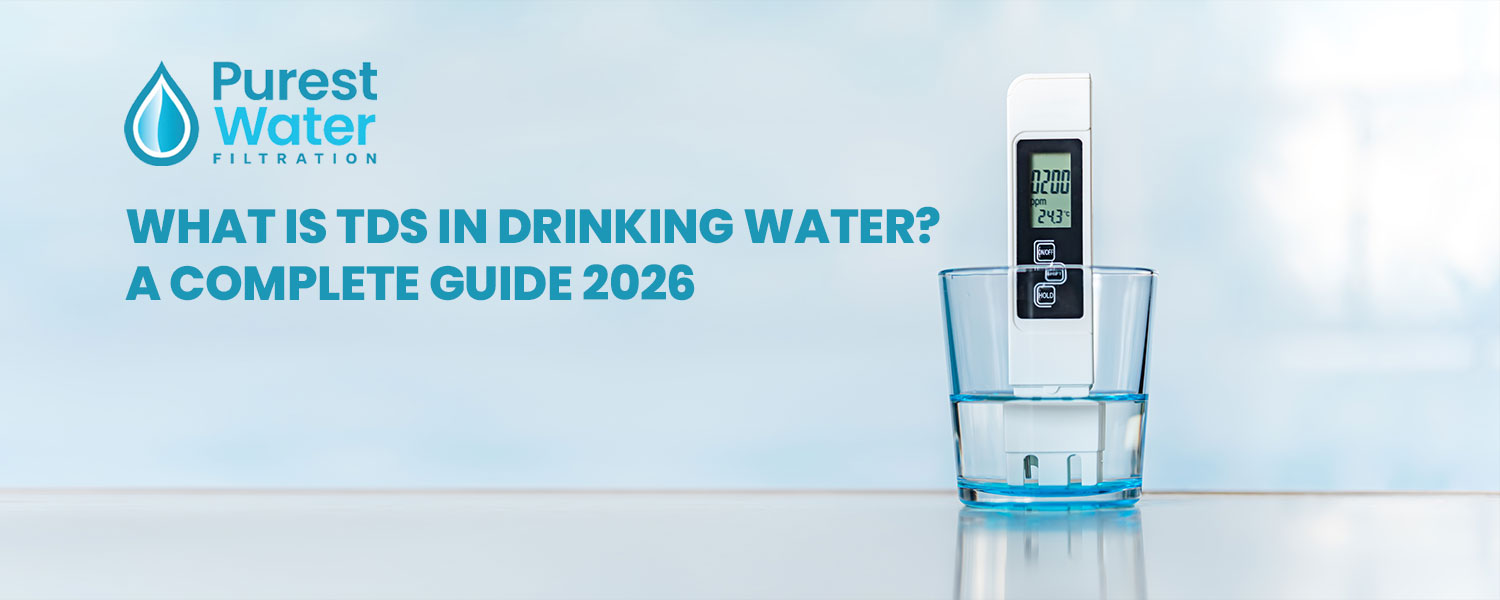
Clean and safe drinking water is important for every home. Many people in Australia use filtration systems to improve water quality, but you may still wonder why your water sometimes tastes different or leaves marks on your glass. One common reason behind this is something called TDS in drinking water.
TDS stands for total dissolved solids, and it plays a big role in how your water looks, tastes, and affects your health. Understanding TDS can help you make better choices about your drinking water and filtration system.
This blog article will help you understand what TDS in drinking water is, where it comes from, how it is measured, what levels are safe, and how to reduce it if needed. At Purest Water Filtration, we believe that clear knowledge helps you keep your water clean, safe, and healthy for your family.
What is TDS in Drinking Water?
TDS (Total Dissolved Solids) refers to all the tiny substances dissolved in your water that you cannot see. These include minerals, salts, metals, and small organic particles. In simple terms, if water is not pure H₂O, the extra materials inside it are called TDS.
Some of these dissolved solids are natural and even helpful, such as:
- Calcium
- Magnesium
These minerals can be good for your body, such as:
- Lead
- Arsenic
- High sodium levels
Where Does TDS in Water Come From?
-
Natural Sources of TDS
Water naturally collects minerals as it flows through the environment. For example, when water moves through rocks and soil, it picks up minerals like calcium and magnesium. Rainwater can also absorb tiny particles from the air before reaching the ground. In some areas, groundwater contains higher levels of dissolved solids depending on the local geology.
-
Human-Induced Sources
Human activities can also increase TDS levels in water. Agricultural runoff can add fertilisers, pesticides, and waste into water sources. Industrial processes and sewage systems may release chemicals and heavy metals. In cities, stormwater can carry oil, salt, and debris into the water supply.
How is TDS Measured?
TDS in drinking water is measured in ppm (parts per million) or mg/L (milligrams per litre). A TDS meter checks this by measuring water conductivity, giving a quick estimate of dissolved solids.
Ways to Measure TDS
-
TDS Meter:
A simple device that measures how well water conducts electricity. Higher conductivity means more dissolved solids.
-
Laboratory Testing:
A detailed test that shows exactly what substances are present in the water.
-
Taste and Appearance:
If water tastes salty, metallic, or looks cloudy, it may have high TDS, although this method is not always accurate.
Is High TDS in Drinking Water a Problem?
High TDS levels are not always harmful, but they can cause several issues depending on what is dissolved in the water. In Australia, it is generally recommended that drinking water TDS levels remain below 500 mg/L for good quality.
-
Health Effects
Some dissolved minerals are safe and beneficial. However, harmful substances like lead or arsenic can pose health risks if present in high amounts. That is why it is important to test your water if you suspect contamination.
-
Taste and Smell
Water with high TDS may taste salty, bitter, or metallic. This can make drinking water less enjoyable.
-
Plumbing and Appliances
High TDS levels can lead to scale build-up in pipes, kettles, and appliances. This can reduce efficiency and increase maintenance costs over time.
What is a Good TDS Level for Drinking Water?
Understanding the ideal TDS range can help you determine if your water is suitable for drinking and It is important to remember that very low TDS is not always better. Water without minerals may taste dull and lack essential nutrients.
Here is a simple guide:
- 0–50 mg/L: Very low – may taste flat
- 50–150 mg/L: Ideal for drinking
- 150–300 mg/L: Acceptable
- 300–500 mg/L: Noticeable taste changes
- Above 500 mg/L: Not recommended for drinking
How to Reduce TDS in Drinking Water
If your water has high TDS levels, there are several effective ways to reduce it.
-
Reverse Osmosis (RO) Filtration
Reverse osmosis is one of the most effective methods for removing dissolved solids. It uses a special membrane that blocks contaminants while allowing clean water to pass through. This system can remove heavy metals, salts, and other impurities.
-
Distillation
Distillation works by boiling water and collecting the steam. The steam is then cooled back into liquid form, leaving most dissolved solids behind.
-
Deionisation and Ion Exchange
These methods are more commonly used in industrial settings but can also help remove specific minerals from water.
At Purest Water Filtration, we often recommend solutions based on your water quality to ensure the best results for your home. Contact our team today to discuss your water needs and find the right solution for your household.
Does Low TDS Mean Better Water?
Not always. While high TDS can indicate contamination, very low TDS water may also not be ideal. Water with extremely low TDS lacks essential minerals like calcium and magnesium. These minerals are important for both taste and health. So, instead of aiming for zero TDS, it is better to aim for a balanced level that provides clean, safe, and good-tasting water.
When Should You Be Concerned About TDS?
It is also important to test your water if TDS levels are above 500 mg/L or if you suspect contamination. Regular testing and maintenance can help ensure your water remains safe for drinking.
You should consider checking your water if you notice:
- Unusual taste or smell
- White stains on dishes or taps
- Build-up in kettles or appliances
- Cloudy or unclear water
Why TDS Matters for Australian Homes
Water quality can vary across different regions in Australia. While city water is usually treated, it may still contain chlorine or dissolved solids that affect taste. In rural areas, water may contain minerals or contaminants from natural and agricultural sources.
Understanding TDS in drinking water helps homeowners make informed decisions about filtration systems and maintenance. Regular monitoring ensures that your water remains safe, clean, and suitable for everyday use.
At Purest Water Filtration, we help Australian households test and improve their water quality with reliable filtration solutions. We also provide expert Water Filter System Maintenance to keep your system running efficiently and your water safe.
Conclusion
TDS in drinking water refers to the total amount of dissolved substances present in your water. While some minerals are beneficial, high levels of unwanted contaminants can affect taste, health, and household appliances.
By understanding TDS levels, testing your water, and using the right filtration system, you can maintain safe and high-quality drinking water for your family. Regular monitoring and proper maintenance are key to ensuring your water remains clean and reliable.
With support from Purest Water Filtration, you can take the right steps to improve your water quality and enjoy fresh, safe drinking water every day.
Frequently Asked Questions
- What does TDS mean in drinking water?
TDS stands for total dissolved solids, which includes all minerals, salts, and particles dissolved in water. - What is a safe TDS level for drinking water in Australia?
A TDS level below 500 mg/L is generally considered safe, with 50–150 mg/L being ideal for drinking. - Can boiling water reduce TDS?
No, boiling water can kill bacteria but does not remove dissolved solids. - Is low TDS water better for health?
Not always. Very low TDS water may lack essential minerals, so a balanced TDS level is best for both taste and health.